Four in Ten Prisoners in Sub-Saharan Africa Have an Eye Condition – Study Finds
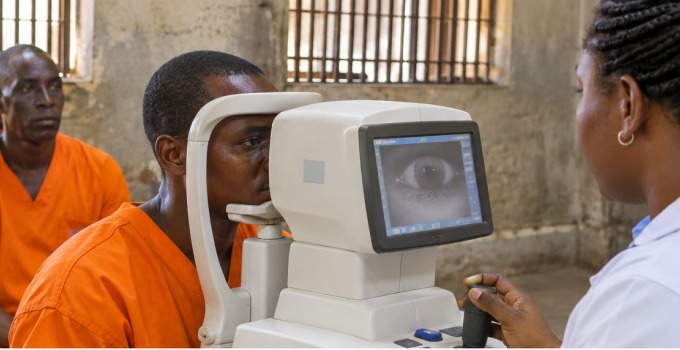
A systematic review by researchers from the Department of Optometry and Visual Science, KNUST and collaborating institutions has found that about four in ten prisoners in sub-Saharan Africa have an eye condition, highlighting the need for improved access to essential eye care in correctional facilities.
The paper, published in Frontiers in Medicine, brings together findings from six studies involving approximately 3,361 participants in Nigeria, Uganda, Tanzania and Kenya.
Led by Dr. Josephine Ampong of the Department of Optometry and Visual Science, KNUST, under the supervision of Dr. Kwadwo Owusu Akuffo, the research examined the burden of eye diseases among incarcerated populations and the factors associated with these conditions.
The researchers found a pooled prevalence of ocular morbidity of 43.1%, indicating that a substantial proportion of the prison population in the countries studied had an eye condition.
Conjunctivitis was the most prevalent condition, affecting an estimated 23.9% of participants, followed by refractive errors at 19.5% and presbyopia at 18.6%.
Other conditions identified included cataract, glaucoma and corneal scarring or opacity, some of which can lead to significant visual impairment if left untreated.
The study also identified factors associated with a higher likelihood of eye conditions.
Individuals aged over 50 years and those with a history of eye trauma had higher odds of ocular morbidity.
Longer periods of imprisonment were associated with higher odds of xerophthalmia, a condition involving dryness of the eye, while access to food from outside prison was associated with lower odds of ocular morbidity.
The findings highlight the importance of eye health in the overall well-being and rehabilitation of people in prison.
Untreated eye conditions can affect daily activities, quality of life and opportunities for education and vocational training, potentially creating additional barriers to rehabilitation and reintegration into society.
Despite these concerns, evidence on eye health among incarcerated populations in sub-Saharan Africa remains limited.
The study addresses this gap by synthesizing available research from four countries, providing a regional overview of the eye health needs of a population that may face significant barriers to accessing preventive and specialist healthcare.
The researchers say the findings support the integration of eye care into routine prison healthcare services.
They recommend comprehensive eye examinations, access to affordable spectacles, timely treatment and clear referral pathways to specialist eye care facilities.
Strengthening nutrition programmes and injury-prevention measures could also help address some of the factors associated with ocular morbidity.
They note that further research across more countries in sub-Saharan Africa, using standardised eye examination methods and including both male and female incarcerated populations, is needed to provide a clearer picture of the regional burden.
The study reinforces the importance of ensuring that access to essential eye care extends to everyone, including people living in correctional facilities.
Four In Ten Prisoners in Sub-Saharan Africa Have an Eye Condition – Study Finds
A systematic review by researchers from the Department of Optometry and Visual Science, KNUST and collaborating institutions has found that about four in ten prisoners in sub-Saharan Africa have an eye condition, highlighting the need for improved access to essential eye care in correctional facilities.
The paper, published in Frontiers in Medicine, brings together findings from six studies involving approximately 3,361 participants in Nigeria, Uganda, Tanzania and Kenya.
Led by Dr. Josephine Ampong of the Department of Optometry and Visual Science, KNUST, under the supervision of Dr. Kwadwo Owusu Akuffo, the research examined the burden of eye diseases among incarcerated populations and the factors associated with these conditions.
The researchers found a pooled prevalence of ocular morbidity of 43.1%, indicating that a substantial proportion of the prison population in the countries studied had an eye condition.
Conjunctivitis was the most prevalent condition, affecting an estimated 23.9% of participants, followed by refractive errors at 19.5% and presbyopia at 18.6%.
Other conditions identified included cataract, glaucoma and corneal scarring or opacity, some of which can lead to significant visual impairment if left untreated.
The study also identified factors associated with a higher likelihood of eye conditions.
Individuals aged over 50 years and those with a history of eye trauma had higher odds of ocular morbidity.
Longer periods of imprisonment were associated with higher odds of xerophthalmia, a condition involving dryness of the eye, while access to food from outside prison was associated with lower odds of ocular morbidity.
The findings highlight the importance of eye health in the overall well-being and rehabilitation of people in prison.
Untreated eye conditions can affect daily activities, quality of life and opportunities for education and vocational training, potentially creating additional barriers to rehabilitation and reintegration into society.
Despite these concerns, evidence on eye health among incarcerated populations in sub-Saharan Africa remains limited.
The study addresses this gap by synthesising available research from four countries, providing a regional overview of the eye health needs of a population that may face significant barriers to accessing preventive and specialist healthcare.
The researchers say the findings support the integration of eye care into routine prison healthcare services.
They recommend comprehensive eye examinations, access to affordable spectacles, timely treatment and clear referral pathways to specialist eye care facilities.
Strengthening nutrition programmes and injury-prevention measures could also help address some of the factors associated with ocular morbidity.
They note that further research across more countries in sub-Saharan Africa, using standardised eye examination methods and including both male and female incarcerated populations, is needed to provide a clearer picture of the regional burden.
The study reinforces the importance of ensuring that access to essential eye care extends to everyone, including people living in correctional facilities.